What really happens once the truck drives away?
For most businesses, waste collection is the visible part of the process. The truck arrives, the bins are emptied, and the site looks clean. What happens next is usually out of sight — but it shouldn’t be out of mind.
Where your waste goes after collection has a direct impact on:
- your costs and future exposure to rising landfill levies
- your environmental footprint and Scope 3 emissions
- your compliance and reputation with customers, regulators, and staff
At Nationwide Waste Solutions, we don’t just organise collections. We help businesses understand where their waste is going, why it’s going there, and how to shift more material from landfill into recycling or Waste-to-Energy (WtE) where appropriate.
The three main pathways: landfill, recycling, and Waste-to-Energy
Once waste leaves your site, it typically follows one of three broad pathways:
- Landfill – disposal.
- Recycling – material recovery and reprocessing.
- Waste-to-Energy (WtE) – energy generation from residual waste.
Each pathway has different environmental, financial and compliance implications. The right mix depends on your waste streams, locations, and goals — but the starting point is understanding what actually happens at each stage.
1. Landfill — the “end of the line” for most mixed waste
Landfill is still the destination for a large portion of business waste, especially when it’s mixed together in general waste bins. After collection, mixed general waste is typically taken to:
- a transfer station, where loads are consolidated before being sent on to landfill; or
- a landfill facility directly, where waste is compacted and buried.
What happens at landfill?
At landfill, waste is tipped, spread, compacted and covered. Modern landfills have engineered liners, leachate capture systems, and gas extraction to reduce environmental impacts — but landfill is still the least preferred option in the waste hierarchy for a reason:
- Resources are lost — once mixed and buried, materials are rarely recovered economically.
- Emissions are generated — as organic waste breaks down without oxygen, it produces methane, a potent greenhouse gas.
- Costs can increase over time — landfill levies and regulatory costs tend to rise, especially as governments push for higher recycling rates.
When landfill is used
Landfill is usually reserved for:
- mixed general waste that is too contaminated or uneconomic to recover
- certain regulated or treated wastes that cannot be recycled or processed safely
- residuals from sorting or processing (e.g. contamination removed from recycling streams)
From a business point of view, landfill is the pathway you want to rely on less over time. That doesn’t mean zero landfill is realistic for every site immediately, but it does mean that better separation and smarter systems can reduce how much ends up buried.
2. Recycling — turning waste into resources
When recyclable materials are separated properly, the journey looks very different.
From collection to sorting
Source-separated streams — like cardboard, commingled recycling (plastics, cans, bottles), metals, or organics — are collected and taken to specialised facilities such as:
- MRFs (Materials Recovery Facilities) for commingled recycling
- paper and cardboard plants for fibre-based materials
- scrap metal yards for metals
- organics processors for food and garden waste
At these facilities, recyclable materials are:
- sorted using a combination of equipment and manual picking
- cleaned or further processed (e.g. shredding, baling, washing)
- sold as secondary raw materials to be used in manufacturing
Why quality in equals quality out
The performance of recycling systems relies heavily on the quality of what goes into the bin:
- Cardboard that’s relatively clean and flattened is easy to bale and reprocess.
- Commingled recycling that is mostly containers (not soft plastics or food scraps) is easier to sort.
- Food and organics that are separated from packaging can be turned into compost or other products.
When recycling loads are heavily contaminated with general waste, they may be partially or fully rejected — and in the worst cases, sent back down the landfill pathway. That’s why signage, bin placement and staff training are so important.
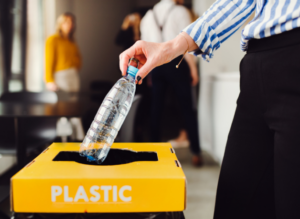
Benefits of recycling for your business
- Lower landfill costs – less general waste volume, fewer mixed lifts.
- Better ESG outcomes – higher diversion from landfill and lower emissions.
- Positive story for customers and staff – visible evidence that the business is doing the right thing.
At Nationwide, we help businesses design their systems so recycling streams are easy to use, well-labelled, and properly serviced — making it far more likely that materials end up in the right place.
3. Waste-to-Energy (WtE) — energy from residual waste
Waste-to-Energy is sometimes called “the missing link” between recycling and landfill. It’s not a replacement for recycling or avoidance, but it can be a better option for certain residual wastes that can’t be economically recycled.
What is Waste-to-Energy?
WtE facilities use non-recyclable waste as a fuel to produce electricity, heat, or other forms of energy. Depending on the technology, this can involve:
- high-temperature combustion in controlled conditions
- advanced thermal processes such as gasification or pyrolysis
These facilities are designed with modern emissions control technology and operate under strict environmental regulations. While there are still emissions, using residual waste to generate energy can:
- reduce the volume of material going to landfill
- recover energy that would otherwise be lost
- capture metals and other materials from the ash for further use, in some systems
What does WtE mean for businesses?
From your perspective, WtE is generally an option for residual waste that can’t be avoided or recycled. The important points are:
- WtE is not a licence to stop separating cardboard, organics or other recyclables.
- It sits below waste reduction and recycling in the waste hierarchy, but above landfill.
- It can provide a more sustainable outcome for certain streams where no practical recycling option exists.
Nationwide monitors how different facilities treat residual waste and, where appropriate, works with providers that use WtE as part of an overall strategy to reduce reliance on landfill.
So where should your waste be going?
Every business is different, but a good rule of thumb follows the waste hierarchy:
- Avoid and reduce — don’t create waste where you don’t need to.
- Reuse — keep products and materials in use longer.
- Recycle — separate cardboard, commingled, metals, organics and other recyclable streams.
- Recover energy — use WtE for suitable residual waste where practical.
- Dispose — send only what’s left to landfill.
In practice, that means:
- moving as much material as possible into clearly separated recycling and organics streams
- reviewing product and packaging choices to reduce unnecessary waste
- using WtE selectively for residuals where it’s the best available option
- treating landfill as the last resort, not the default
How Nationwide Waste Solutions helps you improve the outcome
Where your waste ends up isn’t just about what’s available in your area — it’s about how your system is designed. As a waste and recycling brokerage, Nationwide Waste Solutions:
- works with multiple providers and facilities, not just a single option
- designs bin setups and signage to improve separation at the source
- collects data on volumes, contamination and destinations to show what’s really happening
- identifies where more material can be pushed from landfill into recycling or WtE pathways
We help you answer questions like:
- What percentage of our waste is still going to landfill?
- Which streams could be separated and recycled more effectively?
- Is WtE available and appropriate for any of our residual waste?
- How do these choices impact our costs and emissions over time?
Want to know where your waste really goes?
If you’re not sure what happens after your bins are collected, you’re not alone. Many businesses have limited visibility once the truck leaves the site — and that makes it hard to improve performance.
Nationwide Waste Solutions can review your current setup, explain where your waste is going now, and help you:
- reduce landfill volumes and exposure to levy increases
- increase recycling and, where appropriate, access WtE options
- improve reporting for ESG and Scope 3 emissions
Ready to go beyond “bin out, bin in” thinking? Talk to Nationwide about where your waste goes after collection — and how we can help shift more of it into higher-value pathways.
© 2025 Nationwide Waste Solutions Pty Ltd. All rights reserved.