Where businesses go wrong — and how to reduce legal, safety, and environmental risk.
Clinical and regulated waste is one of the highest-risk waste streams for businesses. Mistakes don’t just lead to higher disposal costs — they can expose organisations to regulatory penalties, safety incidents, and serious reputational damage.
Healthcare providers, aged care facilities, laboratories, and other regulated environments must comply with strict state and federal requirements. Yet many compliance risks arise not from negligence, but from unclear processes, inconsistent training, or lack of oversight.
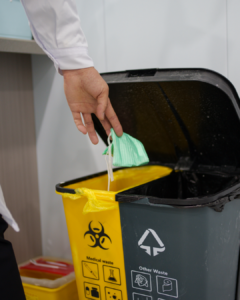
What Is Clinical and Regulated Waste?
Clinical and regulated waste includes materials that pose a risk to human health or the environment if not managed correctly. This typically includes:
- Sharps (needles, scalpels, lancets)
- Waste contaminated with blood or bodily fluids
- Pathological and pharmaceutical waste
- Cytotoxic and hazardous substances
- Certain laboratory and quarantine wastes
Each category carries specific handling, storage, transport, and disposal requirements.
1. Incorrect Waste Segregation
Segregation errors are the most common compliance failure. This includes:
- Placing general waste into clinical bins (driving unnecessary cost)
- Disposing of contaminated materials in general waste
- Incorrect use of sharps containers
Poor segregation increases safety risk and may breach EPA and health department regulations.
2. Inadequate Staff Training
Staff turnover, agency workers, and contractors often receive inconsistent training. Without clear guidance:
- Waste streams are misunderstood
- Sharps are disposed of incorrectly
- Temporary staff follow habits from other sites
Training must be site-specific, role-appropriate, and regularly refreshed.
3. Poorly Managed Sharps Containers
Sharps-related risks remain one of the most serious compliance and safety concerns.
- Overfilled containers increase needle-stick injury risk
- Incorrect container placement leads to unsafe handling
- Expired or damaged containers compromise safety
Sharps management requires active monitoring — not just provision of containers.
4. Documentation and Record-Keeping Gaps
Many businesses struggle with documentation requirements, including:
- Waste transport certificates and manifests
- Disposal and destruction records
- Tracking of regulated waste quantities
Incomplete records create compliance risk during audits or investigations.
5. Contractor Compliance Assumptions
A common misconception is that using a licensed contractor transfers responsibility.
Under Chain of Responsibility obligations, businesses must still ensure:
- Contractors hold current licences and insurances
- Waste is transported and disposed of legally
- Downstream facilities are approved and appropriate
Lack of due diligence exposes organisations to shared liability.
6. Inadequate Storage and Waste Room Design
Clinical waste storage areas are often overlooked. Risks include:
- Unlocked or unsecured waste rooms
- Inadequate signage and segregation
- Overflowing bins creating hygiene and safety hazards
Storage design directly impacts compliance and infection control.
7. Inconsistent Practices Across Multiple Sites
Multi-site healthcare and aged care operators face elevated risk when procedures differ between locations.
Inconsistency leads to confusion, uneven training outcomes, and audit findings — particularly during external accreditation or regulatory reviews.
How to Reduce Compliance Risk in Clinical and Regulated Waste
Effective risk reduction requires structure, not complexity. Best practice includes:
- Clear waste classification and segregation standards
- Regular staff and contractor training
- Sharps audits and container monitoring
- Documented procedures and record retention
- Regular waste and compliance reviews
How Nationwide Waste Solutions Supports Compliance
Nationwide Waste Solutions works with healthcare, aged care, and regulated industries to reduce compliance risk across every stage of the waste lifecycle.
We support clients by:
- Reviewing waste classification and segregation practices
- Providing compliant equipment and service design
- Coordinating licensed and vetted waste contractors
- Maintaining documentation and audit-ready records
- Delivering consistent processes across multiple sites
Why Proactive Compliance Matters
Clinical and regulated waste compliance isn’t just about avoiding penalties — it protects staff, patients, residents, and the environment.
Proactive management reduces risk, supports accreditation requirements, and provides peace of mind that waste is being handled correctly from generation to final disposal.
Are You Confident in Your Clinical Waste Compliance?
If you’re unsure whether your current processes would stand up to scrutiny, a structured review is the safest place to start.
Talk to Nationwide Waste Solutions today about reducing compliance risk in clinical and regulated waste.
© 2025 Nationwide Waste Solutions Pty Ltd. All rights reserved. Serving businesses across Melbourne, Sydney, Brisbane and nationwide.